
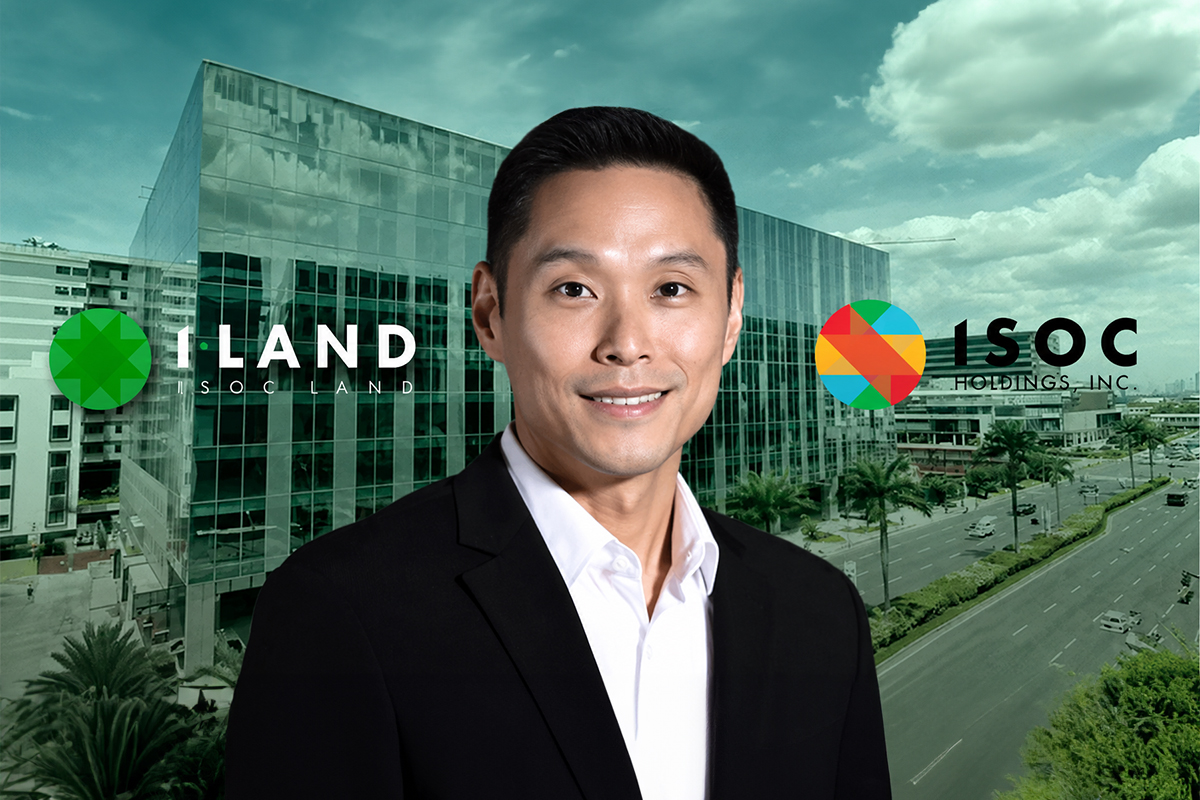
Building one successful company is difficult. Building a second entrepreneurial platform after helping create one of the Philippines’ leading infrastructure firms is even rarer. Michael Cosiquien has done both.
Best known as the co-founder of Megawide Construction Corporation and the founder of ISOC Holdings, Cosiquien has spent nearly three decades building businesses across construction, infrastructure, telecommunications, logistics, real estate, and energy.
Cosiquien graduated from De La Salle University with a degree in engineering, where he met classmate and future business partner Edgar Saavedra. In 1997, the two friends co-founded Megawide Construction Corporation, a company that would later grow into one of the Philippines’ leading infrastructure developers.
After more than two decades with Megawide, Cosiquien left the company and established ISOC Holdings, a diversified investment group focused on long-term growth opportunities.
Through ISOC, he built businesses such as ISOC Land and Orca Cold Chain Solutions, which serve the country’s growing demand for housing and cold chain infrastructure.
Today, as Chairman of ISOC Holdings, Cosiquien continues to pursue opportunities in sectors that support the growth of the Philippine economy. From co-founding Megawide to establishing ISOC Holdings, he has consistently focused on building businesses designed to endure.
After helping build Megawide over two decades, how did Cosiquien begin again and create a new entrepreneurial platform through ISOC Holdings? What lessons from that second chapter of his career can help entrepreneurs build businesses that endure beyond a single venture?
Here are the five business lessons every entrepreneur can learn from Michael Cosiquien, founder and CEO of ISOC Holdings:
1| Know how to start small, learn fast and create opportunities
Many entrepreneurs spend too much time waiting for the perfect opportunity, the perfect timing, or the perfect set of resources before taking action. In reality, most successful businesses begin with modest opportunities that others overlook.
What separates successful entrepreneurs is not where they start, but their ability to learn quickly, execute consistently, and gradually build on each success. Starting small allows entrepreneurs to gain experience, test ideas, and limit risk, while thinking big provides the vision needed to pursue larger opportunities over time.
Businesses are rarely built overnight. They grow through a series of small steps. Entrepreneurs who learn how to create opportunities rather than wait for them are often the ones who build the most enduring companies.
One of the most interesting aspects of Cosiquien’s journey is that he did not begin with a grand business plan. Long before Megawide became one of the country’s largest infrastructure companies, he spent his childhood working in his family’s hardware store. While many children spent summers on vacation, he spent them serving customers and learning the realities of business operations. More importantly, he developed a comfort with work at an early age. This may sound simple, but it created an important advantage.
Entrepreneurship is often less about brilliant ideas and more about the willingness to consistently do difficult work over long periods of time.
During his college years, rather than waiting until graduation to pursue entrepreneurship, he and his future business partner, Edgar Saavedra, were already experimenting with small ventures.
Selling Christmas lights, firecrackers, and other products did not generate life-changing income, but they provided something more valuable: experience. These small ventures taught Cosiquien and Saavedra how to sell, negotiate, and earn a profit, skills that later supported much larger businesses.
Perhaps the most important lesson from Cosiquien’s early years is his willingness to act before becoming an expert. Rather than allowing their lack of experience to stop them, he and Saavedra learned through action. They bought books, submitted bids, made mistakes, and improved along the way. After graduation, instead of waiting for opportunities to appear, Cosiquien chose to create his own path that eventually helped lay the foundation for Megawide.
“I grew up in hardware,” he says. “When I was seven years old, dinadala ako ng tatay ko sa tindahan namin sa Pasay. Akala ko may pagkain, yun pala ginawa akong kahero sa hardware namin. Kasi old school eh, so that’s how I grew up there, all summers, 8 a.m. to 8 p.m. pa nga kami eh. And even all Christmas vacations, I spent them there from Mondays to Sundays yun. Pag-Sunday siguro we close at 2 or 3 p.m., so it’s every day, even up until college. I was used to working.
“Tapos when I went to La Salle, that’s where I met Edgar (Saavedra), kasi blockmates kami sa engineering, ang major ko was IE and siya naman ECE, then I shifted to ECE, siya naman from ECE to CE, ano kami talagang we were really barkada. Parang first week ko pa lang sa La Salle I met him na. Nag-uusap na kami, tapos naging barkada kami. We grew up together, parang teenager to adult eh, so we always talked about doing something together.
“Actually pre-Megawide, ang unang project namin was the painting works in San Juan. Isang room lang yun. May kilala kaming interior designer, sabi nya baka gusto nyong gawin one Sunday. Sabi nya sige gawin namin. Bayad samin P25,000. Ginawa namin kumuha kami ng pintor, may kakilala akong pintor and bumili kami ng mga gamit.
“After we paid the expenses, siguro we earned mga P2,000. Parang 10 percent ganon lang, sabi namin ok ah, kumita ah. At that time, pa-graduate na kami, so sabi namin we wanted to become, ano na, contractors.”
“But before that talagang may pagka-entrepreneur na kami. When we were in college, of course I had my work in the hardware, pero pag mga last quarter na, nagbebenta ako ng Christmas lights at mga paputok, so yun yung additional income ko. Even in school, we were already selling in the school at kung saan-saan, so talaga we were medyo ano na kami, may hasa na.
“After graduating from university, we didn’t really have a lot of offers, so sabi namin we’ll just do business. How can we do construction? And true enough, we knew somebody na nagpapatayo ng building sa Quezon City.
“Ano kami, on-the-job training talaga. We bid, talagang ano walang tulugan everything. Natuto kaming mag-estimate. We learned to estimate and everything because of that bid. First time namin mag-bid pero mali-mali. We bid one time for a project, sabi samin, ‘Ano ‘to ginto? Ganon ang sinasabi sobrang taas diba? So those times, we were learning how to bid.
“Bumili pa kami ng mga libro to learn, but anyway, natuto rin kami. We bid and we won. It was a three-story building. So that’s when we had our first project.
“And that was months before the Asian financial crisis, parang May yata yon eh, tapos nagka-financial crisis in July, August tumama na eh. So tinamaan kami, and kasi at that time in 1997, wala kaming pera. Talagang hirap na hirap kami noon, wala kaming experience, no capital, no nothing.
“Kami talaga, we were on the site, mga ganon. Ang tao lang namin was one warehouse man and one security guard sa gabi. We really struggled through the crisis.
“At that time, we were able to establish Megawide na. We got that name kasi my dad has a company called Metrowide, but we cannot use it, so sabi ko dapat bigger than Metrowide so we came up with Megawide, then gumawa lang kami sarili naming logo.
“Actually my father he wanted me to help in our hardward business, yun ang gusto nya. Kaya lang yung hardware namin maliit lang eh. So I won’t be doing a lot there eh. Nung naging full time na I want to do something more. Parang medyo restless ako. Kasi when, syempre nung initially when we started, it was very difficult and we were going nowhere. So I have to choose. So I decided na sabi ko No, I’m going to put all our energy in Megawide.
“So from that time naalala ko, 8 o’clock ang layo-layo ng bahay ko Pasay to Quezon City to Banaue. Eight o’clock I’m there, tapos umuuwi kami 12 a.m., sometimes 3 a.m. Tapos Monday to Sunday nagtratrabaho ka, ganon. Kasi wala kaming tao eh. So you do all the work and construction. There was no rest eh.
“Then our big break came during 2007. We were able to bid for SM projects, big projects yung Berkeley and Grass. Eh nanalo kami, talagang out of the blue and after that, nagkaron pa nga ng steel crisis, and the world financial crisis, but we had the projects already. And we were able to deliver that successfully.
“We were able to earn the trust of the SM Group, lalo na kay Big Boy (Henry Sy Jr.) sa SMDC, and uh and that’s the time na ginawa kami, parang favored contractor of SMDC. We built Sea Residences, Jazz Residences, kahit yung City of Dreams, we built that.
“Tapos nung 2010, we were contemplating on doing an IPO. So, dun kami napaisip na mag-IPO. So in 2011 we did an IPO, lakas-lakas lang ng loob. Wala kaming alam sa ganon.
“After the IPO, sabi namin, mag-invest tayo ng automated precast plant kasi ang problema sa Pilipinas dati sobrang traditional, sobrang mabagal. With this, we can fast-track yung mga construction, quality can be assured.
“Tapos nung nag-open yung government ng PPP, nanalo kami sa PITX at saka yung pinaka-malaki namin, yung Mactan Airport. We won that bid. After that, we also went into renewable energy. Yung CFO namin dati si Oliver nag champion nyan. Kasi ang idea namin was to find recurring income, eh kasi ang construction sobrang cyclical eh.”
2| Know how to leverage experience to begin again
Many people view success as a destination. Once they build a successful career or company, they become reluctant to leave what is familiar and start something new. However, the most successful entrepreneurs often understand that experience is not merely a record of past achievements. It is an asset that can be applied to new ventures and opportunities.
While a new venture may require fresh ideas and different skills, years of accumulated knowledge, relationships, and credibility provide a significant advantage. Lessons from past successes and failures often help entrepreneurs make better decisions.
When Cosiquien established ISOC, he drew heavily from the experience he gained during his years at Megawide. The knowledge he developed in construction and infrastructure gave him the confidence to pursue new industries and business models.
His years at Megawide exposed him to much more than construction. By handling finance, sales, legal, and administrative functions, he developed a broad understanding of how businesses operate, which gave him the confidence to pursue opportunities beyond a single industry.
Another lesson is the importance of recognizing trends early. Cosiquien entered the tower business after observing that independent tower companies had already become common in other countries. He believed the Philippines would eventually follow the same path and positioned the company accordingly. Instead of creating something entirely new, he adopted a business model that had already proven successful elsewhere.
He also understood that no entrepreneur can be an expert in everything. Rather than trying to run every business himself, he partnered with people who had specialized knowledge. He worked with EDOTCO in towers and brought in experienced executives from major property developers to help build ISOC Land. His experience shows that as businesses grow, success depends not only on individual capability but also on the ability to build strong teams.
“When we started, actually, I handled everything sa back office like the finance, the sales, the legal, admin, while yung sa partner ko, technical and operations,” he says.
“Tapos, when we were growing na, nagkaron kami ng parang we have our own projects. Kanya-kanya kaming projects na we were running.
“Unlike before, it’s just the two of us eh, we just listen to each other. But we came to a point when there’s too many people na. It’s a big operation na. Medyo hinog na kami nun. Syempre nakita nami nagkaka-differ na yung directions and everything, parang I felt that it’s about time na to do something else. So, in 2017, I decided to leave Megawide.
“Initially when I left, of course I didn’t really jump into a new venture right away. Pero, syempre I was used to working. That’s where I spent most of my life, kasi I have a principle na if you stop working, there’s no equilibrium eh. It’s either you’re going up or you’re going down. If you stop, parang you’ll die? It’s a continuance, saka parang I don’t really believe in retirement. I believe that you just have to keep on working, pero you just have to enjoy what you’re doing. Manage your stress, di ba?
“So after few months, I invited some friends then we worked together and put up ISOC Holdings. I called it ISOC as the reverse of my nick name Cosi short for Cosiquien when I was in school. Nag-invest kami in different businesses. Kasi yung construction is nearest to my heart and marami kaming exposure sa property, construction and real estate are magkapatid yan eh, so we put up the ISOC Land, then we also invested in logistics and yung Orca cold storage, yung cold chain.
“And then that time we were looking for other infrastructure. And one infrastructure that we went into was yung naging partner kami ng isang Malaysian company, EDOTCO, so we put up ISOC Edotco Towers. We were one of the pioneers of telco towers that time.
“Kasi dati ang telco towers were part of the telco companies? But in other countries, the telco towers are separate from the telcos. At saka mas efficient yon, so we went into that business.
“Pero yung pinaka-main namin is yung property. We invited people from big property developers. Sila yung nagtulong sa amin. We have a condominium project. It’s a six-tower project in Sucat, which is called I-Land Residences Sucat. Itong sa Sucat it’s selling out. We’re going on our fourth tower na. We also have an office building in MOA area called I-Land Bay Plaza, which is nakatayo na. Pinapa-rent na.
“Actually we’re planning to launch a new project, pero ngayon kasi we’re focusing mostly our energy and our resources on completing and delivering yung I-Land Sucat ‘no. Kasi first, we want to make sure na the delivery is very good, kasi that will be our model and that we want to make sure that the homeowners or the buyers are really happy with our products.
“We made our units very affordable and there’s a lot of amenities, meron kaming in-door basketball. We have several pools, meron kaming pet park. Meron kaming ano clubhouse.”
3| Know how to compete where you have an advantage
In many industries, products and services eventually become similar. As a result, companies find it difficult to compete on anything other than price. When a company introduces better technology, improved processes, or superior customer experiences, it creates additional value that customers are willing to pay for.
Innovation also helps businesses avoid commoditization. Companies that simply copy what others are doing often compete in crowded markets where profit margins are constantly under pressure. By offering something different or better, businesses can build a competitive advantage that is more difficult for others to replicate.
One insight from Cosiquien’s philosophy is that innovation works best when it is built on existing strengths. Before entering a business, he first asks whether the company understands the industry and whether it can contribute something meaningful.
This reduces the risk of pursuing opportunities solely because they are fashionable. Many businesses fail because they enter industries where they lack expertise and assume that technology alone can compensate for that weakness. Cosiquien’s approach is to establish competence first, then use innovation to enhance it.
His cold storage investment illustrates this thinking. ISOC understood infrastructure development and partnered with specialists who understood operations. Automation then became an additional advantage. Innovation was not the business strategy. It strengthened the business strategy.
The same principle appears in I-Land Residences. Instead of competing solely on price or location, Cosiquien introduced features such as LEED certification and other innovations to differentiate the project and provide greater value to buyers.
Another important lesson is that innovation and risk are closely connected. Many entrepreneurs treat risk-taking as a separate activity from innovation. Cosiquien view them as inseparable.
Innovation requires risk because new technologies and systems carry uncertainty. However, he does not advocate taking blind risks. The willingness to take risk comes only after developing a deep understanding of the business. Once the risks are understood, innovation becomes a calculated decision rather than speculation.
“When I enter into a business, it should be something that we can understand,” he says. “It’s always important for us to identify where we are able to provide more value para we can compete in that industry or in that business.
“So if we want to provide more value, it should be aligned with our skill set so we can put innovation into it. Hindi pwedeng parang what they were doing 20 years ago, you’re just going to apply now, and for the next 20 years it’s the same. There should be progress or advancements in technology and systems. There must be innovation that we can bring into the business.
“Katulad nung cold storage business; when we went into it, we understood how to build the infrastructure. Yung operations naman, doon sa partner namin. And since it’s automated, there’s technology in it, there’s innovation. So we felt that was our advantage.
“And that’s also what we do with our own businesses. Like now in I-Land Residences, we always incorporate technology and innovation to make sure that it’s advantageous for our buyers and provides more value. The I-Land Residences Sucat is a LEED-certified affordable community. So we’re the first in that market, ‘no. Tapos sa Orca naman, it’s the first automated cold chain facility in the Philippines. So we’re introducing new technology.
“Sa amin, depending on the kind of business or project that we’re in. Kasi when we started, we wouldn’t have grown if we didn’t take risks eh. Actually, we were one of the best or worst risk-takers, diba? But we were able to grow. And the answer is yun nga, very important sa amin. We really understand what we’re going into. We understand the business. If we cannot understand the business, we cannot go into it, ‘no. Kahit gaano sya ka-faddish or trendy.
“Tapos, it depends on the business if you will take more risk, ‘no. If we can leverage and we understand the business, then we’ll use leverage. Kasi naiintindihan mo na yung risk eh.
“When I started with Megawide, I was handling finance eh. Hindi ako finance, I’m an engineer. Pero ang kailangan, you need to see the net cash flow. And there must be cash flow. Para sa amin, you have to be careful in borrowing. It’s not something that you just get into. It must be something that you can really manage. Then, of course, we want to pay that down. And the focus is to be able to grow with your own cash flow.
“Actually, a lot of it is about taking risks. Like innovating. You cannot just do what everyone else is doing. You have to have a think-differently approach.”
4| Know how to build high-performing teams around a common goal
Keeping people focused on a common goal is important because organizations often fail not from a lack of talent, but from a lack of alignment. A common goal creates focus and helps people make better decisions. When people understand the destination, they are more likely to work together rather than compete against one another.
A common goal creates synergy. Each individual brings different skills and experiences to the organization. On their own, these capabilities have limited impact. However, when they are aligned behind the same objective, the combined result often exceeds what any individual could achieve alone.
For leaders, the challenge is not simply to manage people. It is to create clarity, alignment, and a shared sense of purpose. When people believe they are working toward the same goal and will share in the success that follows, collaboration improves and organizations become capable of achieving results that would otherwise be impossible.
One of the most important aspects of Cosiquien’s leadership philosophy is that high-performing teams do not begin with talent alone. They begin with alignment. Many organizations focus heavily on skills and experience when selecting partners or employees. Cosiquien places equal importance on values and vision. His reasoning is simple. People who possess different values or conflicting goals often pull an organization in different directions, regardless of how talented they may be.
Cosiquien also treats leadership as a partnership rather than a hierarchy. He does not view employees as mere subordinates tasked with following instructions. Instead, he encourages the sharing of ideas and expects people to contribute to decision-making. This creates greater ownership within the organization. When individuals feel that their opinions matter and that they have a stake in the outcome, they become more committed to achieving results.
Cosiquien’s belief that “the whole must be greater than the sum of all parts” reveals how he thinks about teamwork. Many organizations bring together talented individuals but fail to create synergy among them. Cosiquien recognizes that the real advantage comes not from individual capability but from the ability of people to combine their strengths toward a common objective. A team succeeds when collective performance exceeds what its members could achieve independently.
Equally important is Cosiquien’s emphasis on clarity. As organizations grow, confusion often becomes a greater threat than competition. He therefore places importance on communicating objectives, expectations, and targets clearly. When everyone understands what the organization is trying to accomplish, decision-making becomes faster and coordination improves.
“What I learned when looking for a partner, very important yung alignment of values,” he says. “Hindi pwede masyado syang traditional tapos ikaw very advanced. Hindi kayo magkakasundo. You just pull each other out, so there should be alignment of values.
“And of course, we need to know what’s their reputation. It must be something that we can manage or understand. Tapos, important yung pag nag pa-partner na kayo, you share the same vision. Even dito sa sa amin sa ISOC o sa I-Land, we share vision with our people.
“We treat our leaders like partners. Our people are not just tauhan dito. We listen to each other. It’s a sharing of ideas and making sure na we grow together. Actually that’s one principle I always believe in.
“Even in Megawide and ISOC, parati ko sinasabi na the whole must be greater than the sum of all parts. So, hindi pwedeng kanya-kanya kami. Kasi pag eto lang, we can only reach this high, but when we combine our inputs, we can reach higher. So the whole must be greater than the sum of all parts. And that’s what we’re always looking for every time we have partnership.
“Important ang clarity. When I talk to people, it’s the clarity of the message or how I communicate with them. Or the clarity of the goal or the objective. Very important sa amin yon.
“Sabi ko nga, leadership, especially in construction, you’re not there lang eh. Ang project manager mo nandyan pero wala ka. So first, we communicate with them constantly. And we make decisions with them. We work with them on making the right decisions. And we make sure that they understand and know the targets, para we can deliver the targets ‘no.
“Pero yun nga, I think that’s where the leadership really grew for me. Biruin mo, from two people dati sa Megawide naging 5,000 or something. So I think that’s one thing.
“Also, you should be able to set an example. They should know they can follow you, that they’re following the right path. Kasi importante rin that you share your success. Hindi pwedeng ikaw kumikita, yung mga kasamahan mo they’re not. So it must be a shared success. Kasi pag naghirap kayo, hindi naman pwedeng kasama ka sa hirap pero hindi kasama sa saya. That’s one thing ‘no. So you should always share success.
“I remember before, we would be arguing about a lot of things. Pero I think, for me, the only way I could keep everyone focused was by telling them, the goal is to make this big. If we want to make this big, I think this is the way to do it.
“And pag ginawa mo nang ganon, everybody starts working together eh. Kasi gusto ng iba parang gawin natin in five days, 10 days, o gawin nating 1,000 days. Pero once you say that, yun pa lang parang everybody now works together. Parang everybody tries to do it to be able to achieve that goal or vision.
“Ang kailangan lang, ang importante sa akin, it must be a shared success. Everybody must get their reward.
“Ang isa pang sinasabi ko, very important na very clear ang rewards and punishments. Hindi pwedeng parang you’re not doing well, you’re performing poorly, and yet you’re being rewarded. Then when you perform well, you’re rewarded less. It must be very clear, the rewards and punishments.
“When we started ISOC, parang you’re starting all over again. Pero syempre it’s easier kasi now we know how to organize. We got HR, we got an organization, so meron na kaming structure.
“Like before, parang ako yung HR. Ako nag-NLRC, ako yung legal. Kasi wala kaming budget. So I had to read all the contracts. Pero right now, you already have the organization to hire, to get people, and to understand what you need. Dati ang tao lang namin were all college graduates. Tapos sa admin, kami na yon.
“So lahat yon before, kami yung gumagawa. Pati sa engineering, kunyari hindi nya makuha yung design, we would design it. Pero hindi nga ako designer, but we’re engineers naman. So talagang from the ground up.
“Saka yung 20 years of experience with Megawide, it was really a lot eh. Biruin mo from construction to airports to real estate to energy. So dito naman sa ISOC, we went from real estate property development into towers, into logistics. So talagang ang key doon is to have the right partners and the right people.
“It’s either you get the right partner with the right people, or you get the right people to help you run the business. It’s never you alone.”
5| Know how to keep moving forward through difficult times
During times of success, it is easy to become comfortable and overlook weaknesses. Difficulties force individuals and organizations to adapt, solve problems and become more resilient. In many cases, the capabilities that later drive success are built during periods of struggle rather than periods of comfort.
More importantly, growth often comes from discomfort. Important achievements usually require people to leave their comfort zones, take risks, and overcome challenges. While comfort feels safe, it rarely leads to improvement. Progress often comes from facing difficulties and learning from them.
Cosiquien does not view struggle as something temporary. Many people believe that once they achieve success, the challenges will disappear. His experience suggests the opposite. As businesses grow, problems do not vanish. They simply become larger and more complex. This mindset allows him to approach adversity differently. Instead of seeing difficulties as signs of failure, he treats them as a normal part of growth.
There is distinction between productive and unproductive struggle. Everyone faces challenges in life, but not all struggles create value. Cosiquien believes that if struggle is inevitable, it is better to struggle for a meaningful goal. Building a business or pursuing a larger vision may be difficult, but those efforts can produce lasting results.
Early in his journey, Cosiquien responded to challenges by working longer hours and pushing himself harder. Over time, he learned that resilience is not only about working hard but also about managing stress and maintaining perspective. Not every problem needs to be solved immediately. Some challenges require patience, while others become easier to address over time.
Many companies become complacent after achieving success. Cosiquien sees comfort as something that can limit growth. The willingness to question existing practices and look for better solutions helped drive Megawide’s adoption of precast technology and other improvements. In this way, discomfort became a driver of innovation and progress.
His experience with Edgar Saavedra also highlights an important lesson about business partnerships. Although he generally advises people not to go into business with loved ones or close friends, he says that if he had to start over again, he would still choose Saavedra as his partner. Their experience shows that successful partnerships require more than friendship.
During Megawide’s early years, they faced financial constraints, limited experience, and economic uncertainty. Those challenges could have easily discouraged first-time entrepreneurs. Instead, they remained committed to the same goal and continued moving forward. The fact that they were able to build a company that eventually influenced construction practices across the country suggests that the right partnership can become a source of strength during difficult times.
While friendships do not automatically translate into successful businesses, Cosiquien’s experience suggests that when trust and a shared purpose come together, a partnership can help entrepreneurs overcome obstacles that might be difficult to face alone.
“Actually, in business, I will say the struggle is always there,” he says. “It’s real. Kasi sa Megawide naman, the struggle didn’t end. Your problems just became bigger. Your goals just became bigger. And it’s the same now.
“What I realized is that the struggle doesn’t stop, kaya don’t be scared of the struggle. Actually, embrace the struggle. Kasi hindi mawawala eh. You can struggle with your food, with your weight, with your workouts. But you can also struggle for a bigger vision, for a bigger platform.
“So am I still struggling? Yes. I’m still struggling. But tingin ko I’ve already developed the maturity to manage my struggles. So kunyari right now, I manage my stress. Before, parang kahit madaling araw na I still worked. I would still call people. Ngayon, I try to manage that.
“Kasi I think the energy and the approach are different na rin. At saka I know that we cannot solve everything tonight, but tomorrow we’ll try to solve it. Yun nga natutunan ko rin na difficulty is not forever and also success.
“There will always be crises. Ngayon, may energy crisis because of the Iran war. It’s always a cycle. And yun nga, you just have to embrace it. Just embrace discomfort. Parang ako may sinasabi nga ako, the enemy of everything is being comfortable. If you’re comfortable and you love that comfort, you’re going to become uncomfortable.
“I grew up with my father kasi sa hardware eh. Actually, I grew up learning from him. He was my first teacher. Sya talaga yung nagturo sa akin ng mga pinaka-fundamental lessons. Even sa legal matters, I would ask for his advice. Kasi ako nga yung legal dati, pero hindi naman ako lawyer. So I would always ask him. At that time, I was always seeking his advice, and I think I learned a lot from him.
“Yung money talaga you have to learn. Una, we learn naman, you have to be very prudent in handling your money. And you have to make sure that all your spending is really important ‘no. Hindi yan yung parang it goes to nothing.
“Pero kasi when I was with Megawide, talagang we were really forced to learn on our own, kasi we were going into industries that even our parents, or even my father, could not understand.
“Because of my experience, I always advise people: first, don’t partner with your loved ones. They may not be your loved ones next time. Kasi business or work and love are two different things ‘no. Love is a different thing. Love na lang kayo, magbigayan na lang kayo. But business is business. Kasi you have to treat it very professionally.
“Pero yung sa amin kasi ni Edgar, I would do it again. Kasi we were able to impact a lot of people eh. A lot of lives, even our own lives. We were able to change them.
“Our mission before, sinasabi ko parati when we were building Megawide, was to improve or change construction practices in the Philippines. And now it’s changed. If you look around, everybody has precast now. Everybody has to adopt very good construction practices. Kasi importante sa amin, how to make the work faster, easier, cheaper, and better eh. So it’s always been like that. That’s our driving force.”
Published in Esquire